
2026-08-19 · Carlos Mendoza
How Rosenberg's High Water Table Affects Basement Waterproofing Efforts
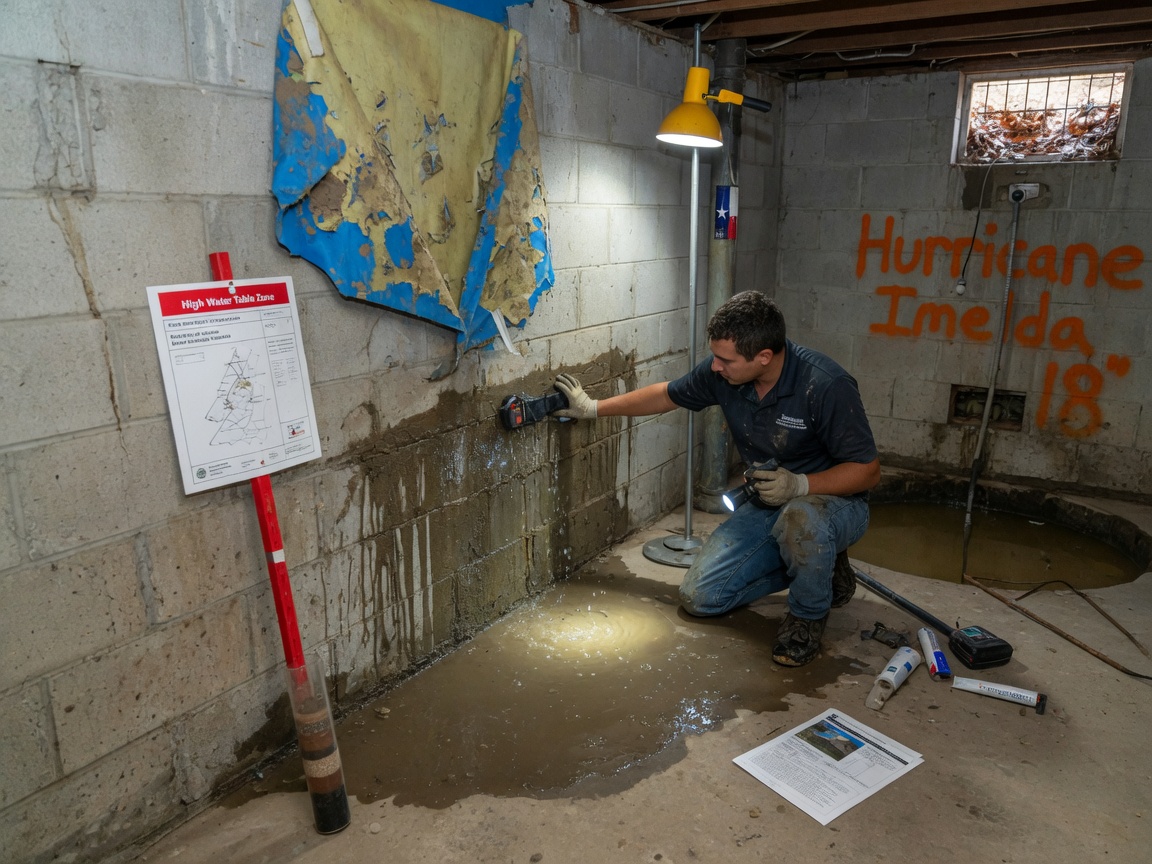
Rosenberg's high water table creates hydrostatic pressure that forces groundwater through basement walls and floors at rates standard sealants cannot reliably block beyond 5–8 years without supplemental exterior drainage. Homes near the Brazos River Park and in Downtown Rosenberg sit on clay-heavy soils that hold moisture longer, especially after the area's hot humid summers raise soil saturation levels. Mild winters do little to dry the ground, so pressure remains steady year-round. Property owners in Rosenberg Heights often see seepage first along cold joints and around pipe penetrations where water finds the path of least resistance.
How Local Soil and Terrain Amplify Pressure
Fort Bend County clay soils expand when saturated, pushing against foundations and creating micro-cracks that allow water entry. Properties close to the Brazos River experience seasonal rises in the water table that can reach within 3–5 feet of grade after heavy spring rains. Older homes built before 1980 in Rosenberg Heights typically lack modern vapor barriers, so moisture migrates upward through slabs. The flat terrain around the Rosenberg Railroad Museum and Fort Bend Museum offers little natural runoff, forcing water to pool against lower foundation sections. These conditions turn minor leaks into recurring issues that interior coatings alone cannot solve long-term.
Why Interior Sealants Fall Short Here
Many Rosenberg basements receive only interior waterproofing paints or epoxy, yet the constant upward pressure from the high water table pushes moisture through the concrete matrix itself. Within 3–6 years, efflorescence and spalling appear on walls in homes near Sugar Land and Richmond where similar soils exist. Exterior approaches such as French drains and dimple membranes installed 4–6 feet below grade intercept water before it reaches the foundation. Structural drying becomes necessary when seepage has already occurred, and structural drying & dehumidification removes trapped moisture that paint cannot address. Without exterior intervention, repeated cycles of wetting and drying accelerate concrete deterioration.
Practical Steps for Rosenberg Homeowners
Inspect sump pits and discharge lines twice yearly, especially after summer storms that raise the water table. Grade soil 6–8 inches away from the foundation over 10 feet to reduce surface water contribution. Install battery backup on sump pumps because power outages during Fort Bend storms can allow rapid basement flooding. When moisture appears behind finished walls, professional assessment prevents hidden mold growth that later requires mold remediation. Homeowners in Rosenberg Heights who combine exterior drainage with interior dehumidification see fewer callbacks than those relying on sealants alone.
When Restoration Becomes Necessary
Even well-planned waterproofing can be overwhelmed by extreme events such as tropical remnants that drop 8–12 inches of rain in 48 hours. In those cases, flood damage cleanup restores affected spaces while water damage restoration addresses saturated drywall and flooring. Review the article on cost factors for water damage restoration in Fort Bend County homes to understand how soil conditions influence drying times and equipment needs. Early intervention after the first signs of seepage keeps repairs smaller and protects the structure from long-term compromise.