
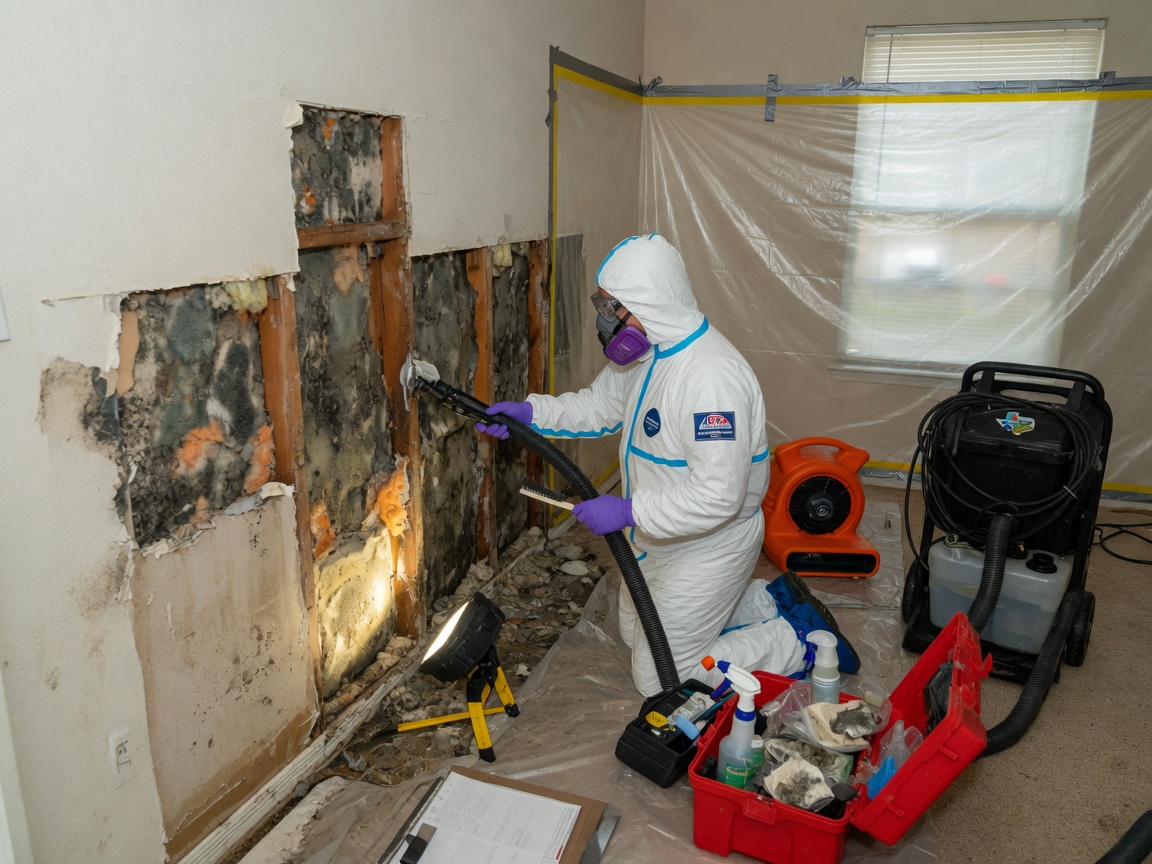
Rosenberg’s hot humid summers create ideal conditions for mold to take hold quickly after roof leaks or plumbing failures, especially in the older wood-frame homes common in Downtown Rosenberg. These properties often have limited attic ventilation and original plaster that traps moisture against lath, allowing hidden colonies to spread into wall cavities before homeowners notice musty odors. Fort Bend’s mild winters do little to slow growth once moisture is present, so remediation crews must account for year-round risk rather than seasonal spikes alone.
Crawl spaces in Rosenberg Heights sit close to the water table near the Brazos River, so vapor barriers and French drains frequently fail, feeding mold on joists and subfloor. Remediation here requires negative-air machines and HEPA filtration to keep spores from migrating into living areas during removal. Drywall sections are cut at least 18 inches beyond visible growth, and antimicrobial treatments are applied only after moisture sources are corrected to prevent recurrence.
Post-flood work near the Brazos River Park often involves porous materials like carpet padding and insulation that must be discarded rather than cleaned. Crews document every step with photos and moisture readings so homeowners can show insurers exactly what was removed and why certain surfaces required full replacement instead of surface treatment.
Technician insight
In Rosenberg the thing that catches most people out with Mold Remediation is how fast growth returns in the humid months if the original leak near the Brazos River floodplain is not fixed first; older Downtown Rosenberg homes with plaster walls hide moisture behind the lath so simply spraying the surface never solves it.
Rosenberg Heights Crawl Space Job
A homeowner noticed a musty smell after heavy spring rain. Inspection found standing water under the house and mold on floor joists. Crews installed containment, removed affected insulation, treated the joists, and added a new vapor barrier. The odor disappeared and moisture readings stayed below 12 percent.
Mold Remediation Services We Offer
✓Attic Mold Remediation
Removes mold from Rosenberg attics where poor ventilation and summer humidity allow growth on rafters and insulation.
✓Crawl Space Mold Treatment
Addresses mold on joists and vapor barriers in homes near the Brazos River where groundwater keeps soil damp year-round.
✓Post-Flood Mold Cleanup
Handles mold that develops after river or storm flooding in Downtown Rosenberg and Rosenberg Heights neighborhoods.
✓Drywall Mold Removal
Cuts and replaces affected drywall while containing spores so they do not spread to unaffected rooms.
✓Black Mold Containment
Sets up negative pressure and HEPA filtration to isolate Stachybotrys growth common after undetected leaks in Fort Bend homes.
Mold Remediation Cost in Rosenberg, TX
| Service | Typical Range | What Affects It |
|---|---|---|
| Initial Moisture Inspection | $150–$300 | Size of home and number of affected rooms change the scope. |
| Attic Mold Remediation | $800–$2,200 | Insulation type and ventilation access affect labor. |
| Crawl Space Treatment | $600–$1,800 | Vapor barrier condition and standing water presence move the price. |
| Drywall Section Removal | $400–$1,100 | Height of cuts and need for new insulation add cost. |
Ranges are typical for Rosenberg, TX and confirmed with an exact written quote before any work starts.
How it works
- 1
Moisture Mapping
Technicians use meters and thermal imaging to locate hidden moisture in Rosenberg homes before any demolition begins.
- 2
Containment Setup
Plastic barriers and negative air machines isolate the work zone so spores stay out of living spaces.
- 3
Removal and Disposal
Affected materials are cut out, bagged, and removed while surfaces receive antimicrobial treatment.
- 4
Drying and Clearance
Dehumidifiers and air movers dry the structure, followed by independent testing to confirm levels are safe.
Pricing
Most Rosenberg mold jobs are priced by affected square footage and access difficulty rather than flat rates.