
2026-08-19 · Carlos Mendoza
Cost Factors for Water Damage Restoration in Fort Bend County Homes
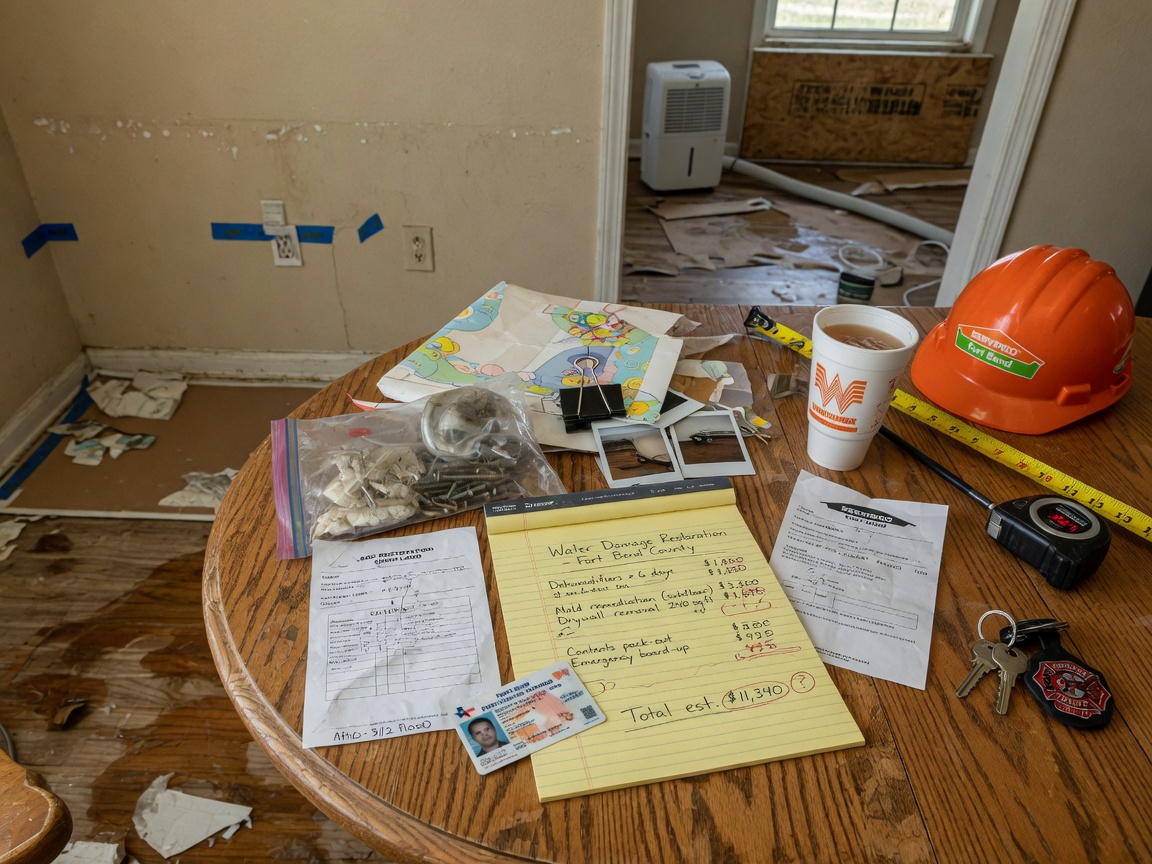
Water damage restoration in Fort Bend County homes typically ranges from $1,500 to $7,500, with most Rosenberg projects falling between $2,200 and $5,800 once the square footage, water category, and drying time are assessed.
Extent of Damage and Affected Materials
The square footage and depth of saturation drive the largest portion of any invoice. A 200-square-foot bedroom with water in the carpet pad and subfloor often costs $1,800–$2,600, while the same water reaching 600 square feet across a living room, hallway, and two closets can reach $4,200–$5,800. Older homes in Downtown Rosenberg frequently have plaster walls and hardwood floors that absorb and hold moisture longer than newer drywall, adding 20–30 percent to drying time. Rosenberg Heights properties built in the 1970s and 1980s often have slab-on-grade construction with limited access under cabinets, requiring more demolition and therefore higher labor hours. Technicians measure moisture at multiple depths with meters rather than relying on surface readings alone, because hidden pockets behind baseboards or under vinyl can double the final bill if missed on the first visit.
Category of Water and Contamination Level
Clean water from a burst supply line is the least expensive to handle, while Category 3 black water from the Brazos River or municipal backups requires full containment, PPE, and disposal protocols that add $1,000–$2,500. In Fort Bend County, heavy rain events can push river water into yards near Brazos River Park, turning an otherwise straightforward extraction into a multi-day sewage cleanup. Gray water from washing machines or dishwashers sits in the middle range and still demands antimicrobial treatment because the region’s hot humid summers allow bacterial growth within 24–48 hours. Homeowners who delay extraction past the first day usually see an extra $600–$1,200 in antimicrobial and disposal fees once mold colonies begin forming on wet drywall.
Local Climate, Soil, and Response Timing
Hot humid summers in Rosenberg keep relative humidity above 70 percent for weeks, slowing evaporation and requiring more dehumidifier capacity than drier climates. Mild winters reduce freeze-related pipe bursts but increase condensation issues inside poorly ventilated crawl spaces common in older Fort Bend stock. Clay-heavy soils around Rosenberg Heights retain water after storms, keeping foundations damp and extending structural drying cycles by two to four days. Calling for Emergency Water Extraction within the first four hours keeps most jobs under the $3,000 mark; waiting 24 hours often pushes costs past $4,500 because secondary damage has already begun. Crews from i-DRY at 1642 Perennial Ln respond around the clock and stage equipment immediately to stay ahead of the humidity curve.
Additional Variables and Long-Term Considerations
Electrical safety inspections, content manipulation, and disposal of saturated insulation each add line items that vary by home age and layout. Properties near the Rosenberg Railroad Museum or Fort Bend Museum often sit on smaller lots with limited equipment access, requiring hand-carry of dehumidifiers and therefore higher labor. Homeowners in nearby Richmond or Sugar Land face similar pricing because the same Fort Bend humidity and soil conditions apply. After initial drying, many Rosenberg residents review the article What Rosenberg Residents Should Know About Mold Growth After Summer Storms to understand follow-up risks. Others dealing with repeated yard flooding read Local Drainage Issues on the South Side of Rosenberg and How They Lead to Yard Flooding before deciding on preventive grading. Accurate moisture mapping and daily documentation remain the most reliable ways to keep final invoices predictable rather than surprising.