
2026-08-19 · Carlos Mendoza
Drying Techniques for Hardwood Floors in Historic Rosenberg Homes
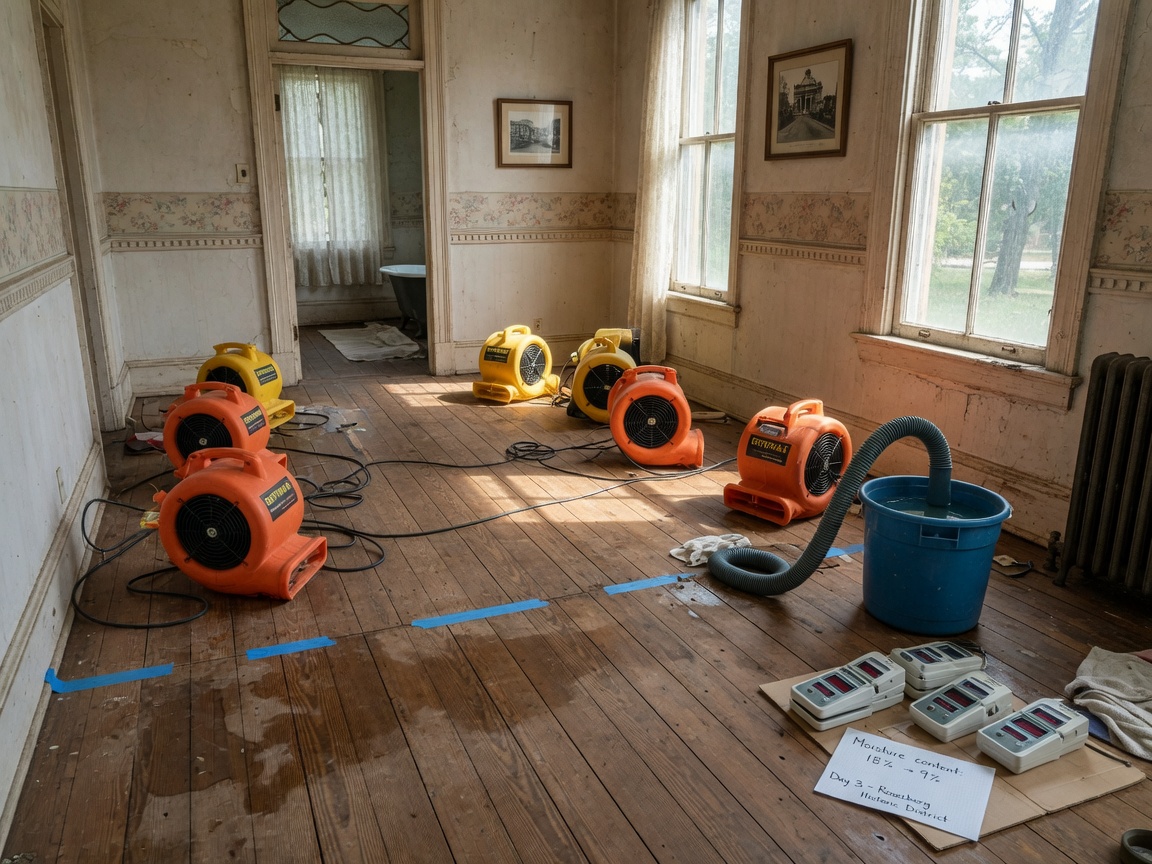
In historic Rosenberg homes, effective drying of hardwood floors typically takes 7 to 14 days using controlled airflow and dehumidification when water exposure is caught early. This timeline accounts for the dense oak or pine planks found in properties near the Rosenberg Railroad Museum and Fort Bend Museum, where older subfloors trap moisture longer than modern builds. Hot humid summers in Fort Bend County extend drying periods because ambient moisture levels slow evaporation from the wood grain. Mild winters provide a shorter window for natural drying before humidity rises again. Owners in Downtown Rosenberg often see cupping along plank edges within 48 hours if extraction is delayed.
Assessing Moisture in Older Rosenberg Flooring
Before any drying begins, measure moisture content in the hardwood and subfloor using pin meters and infrared scanners. In homes built before 1950 around Rosenberg Heights, layers of varnish or shellac can trap water beneath the surface, creating hidden pockets that standard fans miss. Check for buckling near baseboards where the Brazos River Park floodplain influences soil moisture. Document readings at multiple points across each room, noting that planks wider than 3 inches expand more dramatically. This step prevents over-drying that cracks historic finishes. Link findings to a full Water Damage Restoration plan when readings exceed 18 percent.
Air Movement and Targeted Extraction Steps
Set up air movers at 45-degree angles along the floor edges to create cross-ventilation without lifting individual planks. In Rosenberg's humid climate, pair these with low-grain refrigerant dehumidifiers running at 70 pints per day capacity for rooms up to 400 square feet. Start extraction with a weighted vacuum on affected boards within the first 6 hours to pull standing water from joints. Rotate equipment every 12 hours to reach under-cabinet areas common in Fort Bend County kitchens. Avoid high-heat methods that can darken aged oak. Monitor progress daily until moisture drops below 12 percent.
Humidity Control in Fort Bend Summers
Maintain indoor relative humidity between 35 and 45 percent throughout the drying cycle, especially from May through September when outdoor levels often exceed 80 percent near Sugar Land and Richmond. Use supplemental desiccant units in enclosed spaces like those found in homes close to the Fort Bend Museum. Seal off unaffected rooms with plastic sheeting to focus drying energy on the hardwood zone. This approach counters the mild winter rains that reintroduce moisture through crawl spaces in Rosenberg Heights properties. Check filters daily because high humidity loads them faster than in drier regions.
Monitoring Progress and Final Checks
Record moisture readings every 24 hours and adjust equipment placement when readings plateau. Historic floors in Downtown Rosenberg often require an extra 3 to 5 days compared with newer construction because multiple finish layers slow vapor release. Once readings stabilize, sand and refinish only after a 48-hour observation period to confirm no rebound swelling. Homeowners near the Brazos River Park should schedule follow-up checks after the next heavy rain. For properties with repeated issues, review Cost Factors for Water Damage Restoration in Fort Bend County Homes to plan preventive drainage upgrades.
When Professional Structural Drying Supports Homeowners
Complex layouts with multiple layers of flooring benefit from commercial Structural Drying & Dehumidification that includes negative air machines. Technicians at i-DRY arrive within hours from 1642 Perennial Ln and run equipment 24 hours daily until targets are met. This service integrates with extraction on the first visit, reducing total project length for Rosenberg Heights homes. Residents in nearby Richmond often combine this with flood-damage protocols when river levels rise. Consistent monitoring prevents secondary mold growth that thrives in the county's warm, moist conditions.