
2026-08-19 · Carlos Mendoza
Removing Standing Water From Rosenberg Garages After Flash Floods
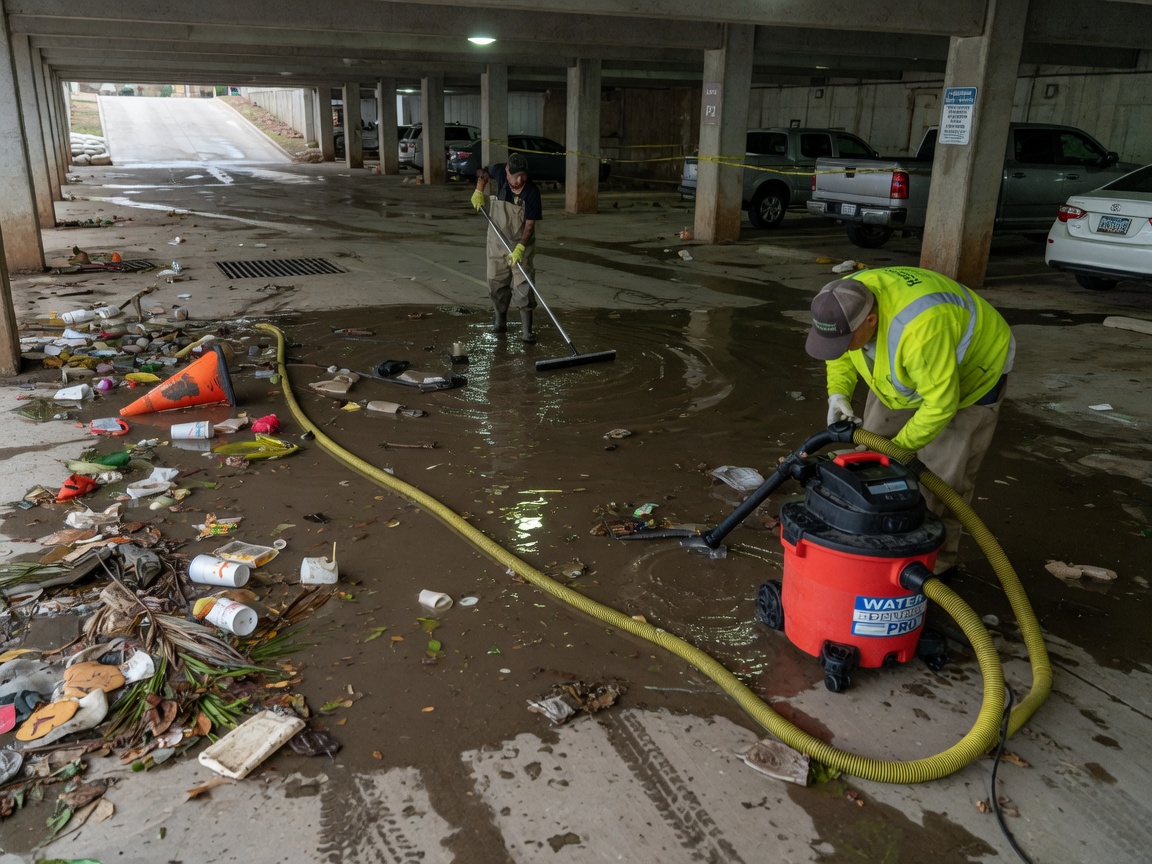
Professional crews using submersible pumps and wet vacuums typically clear standing water from a standard Rosenberg garage in 1–3 hours, though complete drying of the slab and lower walls in the county's hot humid summers can take 4–10 days with continuous dehumidification.
Initial Assessment of Garage Flooding
Start by measuring water depth and noting how far it reached up the walls or into stored items. In Rosenberg Heights, many homes sit on raised slabs near the Brazos River Park drainage paths, so water often pools against the back wall where the grade slopes inward. Check for sewage mixing if the flood reached Downtown Rosenberg streets, since municipal lines can back up during heavy rains. Document everything with photos before any removal begins, especially if the water contacted electrical outlets or HVAC returns near the garage floor. This assessment directly informs whether the job stays within basic extraction or requires full flood damage cleanup protocols.
Safe Extraction Methods for Standing Water
Never use household shop vacs on volumes over a few inches; they lack the capacity and can spread contaminated water. Instead, position a 2-inch or larger submersible pump at the lowest point, usually the garage door threshold, and discharge into the street or a storm drain away from the foundation. Follow with wet/dry vacuums to pull the final half-inch from expansion joints and under storage cabinets. In Fort Bend County, where clay soil holds moisture against slab edges, crews often cut small weep holes at the base of drywall to release trapped water before extraction finishes. These steps prevent hydrostatic pressure from pushing moisture back into the living space after the visible water is gone.
Drying Concrete Slabs in Humid Conditions
Rosenberg's hot humid summers keep relative humidity above 70 percent for weeks, slowing evaporation from 4-inch slabs that can hold gallons of water per square foot. Place commercial air movers at 45-degree angles across the floor and pair them with low-grain dehumidifiers rated for at least 70 pints per day per 500 square feet. Monitor moisture with a penetrating meter until readings drop below 15 percent; this often requires 4–7 days of continuous equipment in mild winter months and up to 10 days in peak summer. Homeowners in Sugar Land and Richmond who skip this step frequently see mold return within 30 days, which is why many connect this process to the guidance in what Rosenberg residents should know about mold growth after summer storms.
Preventing Long-Term Issues in Rosenberg Homes
After the slab tests dry, apply a penetrating sealer to the concrete to reduce future absorption during the next flash flood. Replace any insulation or drywall that wicked water more than 2 inches above the floor line, and consider adding a French drain along the garage perimeter if your lot sits lower than neighboring properties in Rosenberg Heights. For properties near the Fort Bend Museum area where older slabs lack vapor barriers, schedule a follow-up visit with structural drying & dehumidification crews before storing vehicles or tools again. These targeted steps address the specific soil and weather patterns that make garage flooding a recurring issue in Fort Bend County.