
2026-08-19 · Carlos Mendoza
Post-Storm Cleanup Timeline for Rosenberg Families Dealing With Water Intrusion
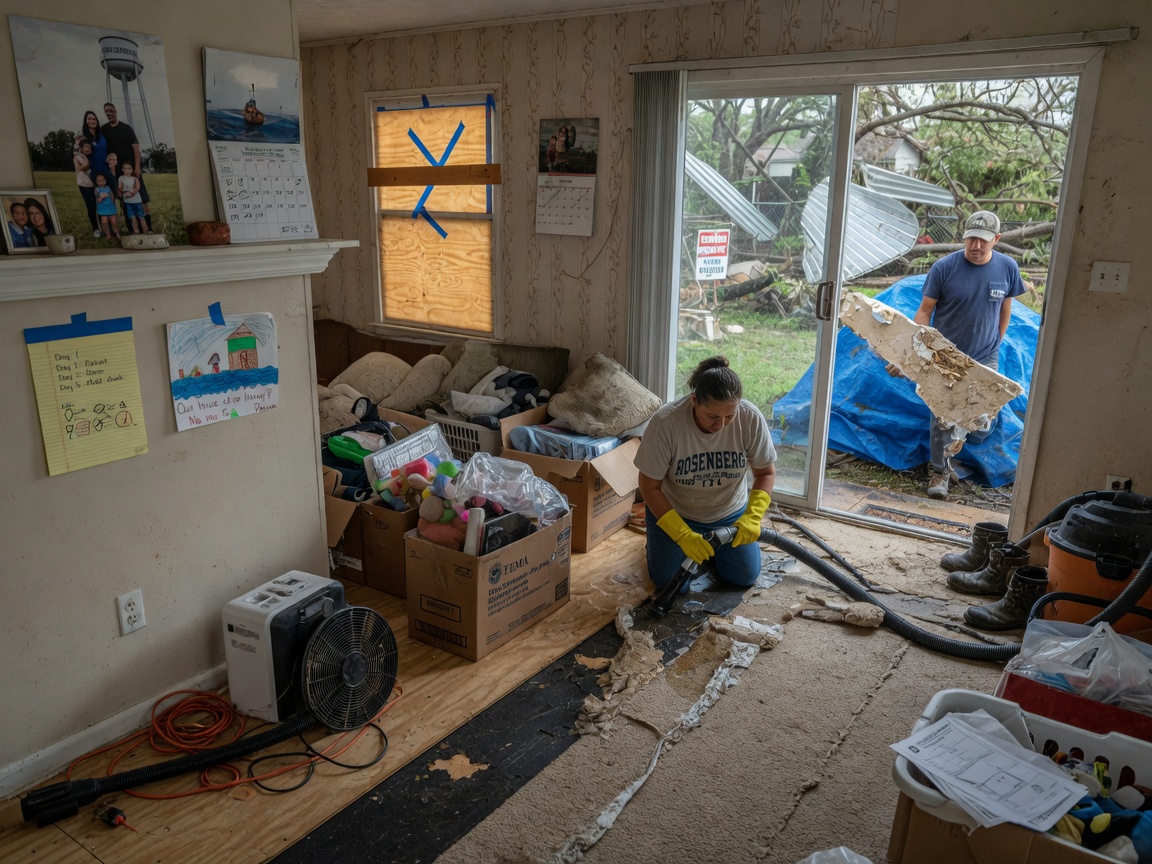
For Rosenberg families dealing with water intrusion after storms, the post-storm cleanup timeline typically begins with extraction within the first 24 hours and completes initial drying in 3 to 5 days, though full structural drying and monitoring often extend to 10 to 21 days due to hot humid summers in Fort Bend County.
Immediate Response Window
Water intrusion from summer storms hits homes in Downtown Rosenberg and Rosenberg Heights hardest because older housing stock often features slab foundations and older plumbing that channel water quickly into walls and floors. Families should shut off power to affected zones and document visible damage before extraction crews arrive. i-DRY Water Damage Restoration operates 24 hours from 1642 Perennial Ln and prioritizes removal of standing water to limit saturation in carpet pads and baseboards. Hot humid summers keep outdoor humidity above 70 percent most days, which slows natural evaporation and requires immediate mechanical extraction. Properties near the Brazos River Park face added runoff from surrounding terrain that can push water under doors and into crawl spaces within hours of heavy rain.
Extraction and Initial Drying Phase
Professional extraction equipment removes bulk water from Rosenberg homes in the first 24 to 48 hours, followed by air movers and dehumidifiers that target moisture levels below 15 percent in affected materials. In mild winters, pipe bursts remain rare, yet summer storms deliver sudden volumes that overwhelm gutters on 1970s-era homes common in Rosenberg Heights. Crews place sensors in multiple rooms to track drying progress and adjust equipment placement daily. Storm Damage Restoration teams coordinate with homeowners to move furniture and lift flooring edges without creating new damage paths. This phase prevents secondary issues when humidity lingers after the storm passes.
Structural Drying and Monitoring
Once bulk water is gone, Structural Drying & Dehumidification continues for 5 to 10 days in Fort Bend County homes because high summer humidity prevents materials from reaching safe moisture readings quickly. Technicians check wall cavities behind drywall in kitchens and bathrooms where water travels farthest along framing. Homes near Richmond often share similar soil conditions that retain moisture longer after river-adjacent flooding events. Daily moisture logs guide equipment runtime and help families understand when rooms can be returned to normal use. Skipping this step leaves hidden dampness that later affects hardwood and cabinetry.
Mold Prevention and Final Steps
After structural drying reaches target levels, attention turns to preventing mold growth, which can begin within 48 hours in humid Rosenberg conditions. What Rosenberg Residents Should Know About Mold Growth After Summer Storms outlines inspection points around window sills and under sinks where water pooled during storms. Final restoration includes replacing saturated insulation and treating affected surfaces before new finishes are installed. Families in Sugar Land and surrounding areas follow the same sequence because regional weather patterns create consistent humidity challenges. Completing each phase in order reduces callbacks and keeps indoor air quality stable once the home is reoccupied.